Filter by
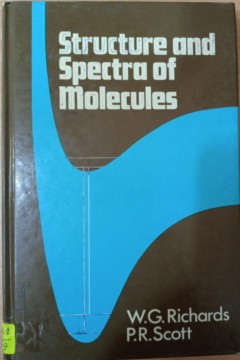
Structure and Spectra of Molecules
This book introduces the relationship between molecular structure and spectroscopic behavior, covering fundamental principles and applications in modern chemistry and molecular physics.
- Edition
- 1st edition
- ISBN/ISSN
- 9780471905776
- Collation
- 182 p. : ill.
- Series Title
- -
- Call Number
- 541.22 R519
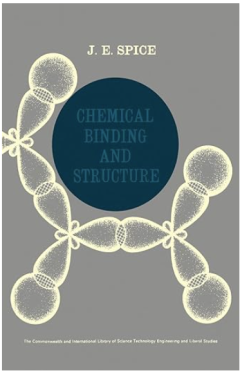
Chemical Binding and Structure
A digital edition focusing on the principles of chemical bonding and molecular structure, presented in a Kindle Print Replica format for accurate reproduction of the original text.
- Edition
- Kindle Edition, Print Replica
- ISBN/ISSN
- 13: 978-1483226972
- Collation
- -
- Series Title
- Not part of a series
- Call Number
- 541.396 S754
Elementary Quantum Chemistry
This textbook introduces the fundamental principles of quantum chemistry, including wave functions, Schrödinger equation, atomic structure, and chemical bonding. It is designed for undergraduate students in chemistry and related fields.
- Edition
- Not specified
- ISBN/ISSN
- -
- Collation
- 726 pages : illustrations ; 24 cm
- Series Title
- Not Applicable
- Call Number
- 541.28 P637
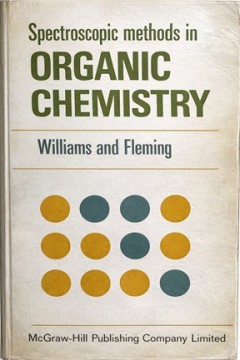
Spectroscopic Methods in Organic Chemistry
Introductory and advanced guide to spectroscopic techniques in organic chemistry. Covers IR, NMR, and UV spectroscopy methods. Widely used as a reference for chemistry students and researchers.
- Edition
- Revised first impression
- ISBN/ISSN
- -
- Collation
- -
- Series Title
- European Chemistry Series (mentioned in front pages)
- Call Number
- 547 W722
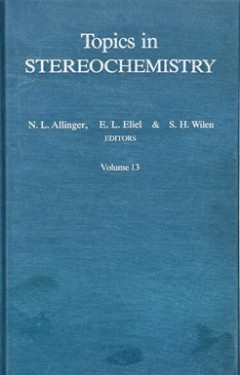
Topics in Stereochemistry
Scholarly volume focusing on advanced topics in stereochemistry. Contains contributions from multiple researchers. Part of the ongoing Topics in Stereochemistry series.
- Edition
- Not specified
- ISBN/ISSN
- 0-471-05680-4
- Collation
- 1 volume ; 24 cm
- Series Title
- Topics in Stereochemistry
- Call Number
- 547.5046 T673
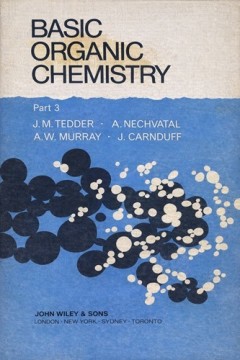
Basic Organic Chemistry. Part 3
This volume introduces students to general organic chemistry mechanisms. It covers aromaticity, heterocyclic compounds, alicyclic and saturated heterocyclic compounds, molecular shape, reaction mechanisms, and applications of simple quantum mechanics to organic molecules.
- Edition
- Not explicitly stated (likely first edition, 1970)
- ISBN/ISSN
- 0-471-85013-6
- Collation
- -
- Series Title
- Basic Organic Chemistry
- Call Number
- 547 T256
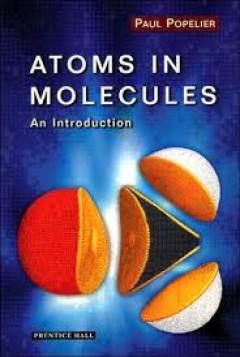
Atoms in Molecules: An Introduction
This book offers an accessible introduction to the theory of Atoms in Molecules (AIM), focusing on its quantum mechanical basis and chemical relevance. It bridges theoretical foundations and practical analysis, making it suitable for advanced undergraduate and graduate students in chemistry.
- Edition
- 1st Edition
- ISBN/ISSN
- 0-582-36798-0
- Collation
- xv, 164 pages : illustrations ; 24 cm
- Series Title
- Prentice Hall Molecular Science
- Call Number
- 539. P825

Student Study Guide to Accompany Chemistry: The Molecular Nature of Matter an…
This study guide supports the textbook "Chemistry: The Molecular Nature of Matter and Change" by providing chapter summaries, problem-solving strategies, and practice questions to reinforce key chemistry concepts.
- Edition
- 1st Edition
- ISBN/ISSN
- 0815180187
- Collation
- 483
- Series Title
- -
- Call Number
- 541.22 / W 374
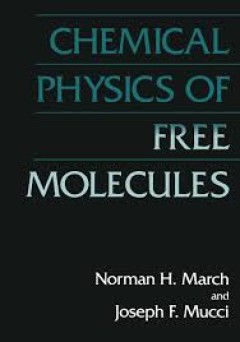
Chemical Physics of Free Molecules
This book presents a comprehensive treatment of the physics and chemistry of isolated molecules, addressing molecular orbitals, spectroscopy, and quantum behavior. Written by leading theorists in the field, it is intended for advanced undergraduates, graduate students, and professionals.
- Edition
- 1st Edition
- ISBN/ISSN
- 0-306-44270-1
- Collation
- 540
- Series Title
- -
- Call Number
- 541.224 M315

Biotechnology‑II: Including Cell Biology, Genetics, Microbiology
This text offers a cohesive blend of cell structure, genetic principles, and microbiology from a biotech perspective. Each of its ~30–32 chapters finishes with a summary and review questions—ideal for B.Sc. biotech syllabi. A molecular-cell approach unifies the topics.
- Edition
- 1st Edition, originally published in 2007 Reprint
- ISBN/ISSN
- 8122414176
- Collation
- -
- Series Title
- -
- Call Number
- 574,192 S495
 Computer Science, Information & General Works
  Philosophy & Psychology
  Religion
  Social Sciences
  Language
  Pure Science
  Applied Sciences
  Art & Recreation
  Literature
  History & Geography