Filter by

Chemistry: An Introduction to Organic, Inorganic and Physical Chemistry
A unified introduction to chemistry, covering organic, inorganic, and physical principles. Designed for students with limited math background. Features worked examples, exercises, and web-based resources.
- Edition
- 2nd Edition
- ISBN/ISSN
- 0-13-086924-4
- Collation
- xxii, 1184 pages
- Series Title
- -
- Call Number
- 540 H842
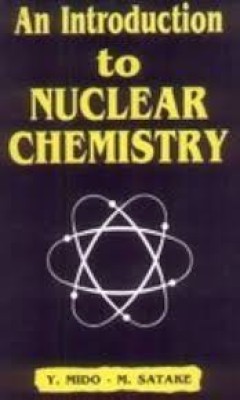
An Introduction to Nuclear Chemistry
A foundational text in nuclear chemistry authored by Japanese chemists Y. Mido and M. Satake. It presents key concepts such as nuclear structure, types of radioactive decay, and the applications of nuclear processes in real-world contexts. Suitable for advanced undergraduate or beginning graduate courses.
- Edition
- 2st Edition
- ISBN/ISSN
- 81-7141-277-7
- Collation
- 235 p
- Series Title
- -
- Call Number
- 541.38 M627
Solutions Manual for Physical Chemistry
The Solutions Manual for Physical Chemistry, 3rd Edition by Laidler and Meiser provides worked-out solutions to selected textbook exercises. Aimed at helping students understand key concepts and improve problem-solving skills in physical chemistry.
- Edition
- 3rd Edition
- ISBN/ISSN
- 0-395-91849-9
- Collation
- xii, 200 pages ; 28 cm
- Series Title
- -
- Call Number
- 541.3 L185
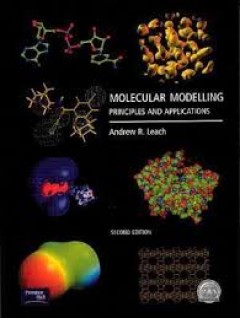
Molecular Modelling: Principles and Applications
This second edition offers comprehensive coverage of molecular modeling techniques, including quantum mechanics, molecular mechanics, and molecular dynamics. Designed for students and researchers in chemistry, biochemistry, and materials science, it includes case studies and practical examples.
- Edition
- 2nd Edition
- ISBN/ISSN
- 0-582-38210-6
- Collation
- xxv, 745 pages : illustrations ; 25 cm
- Series Title
- -
- Call Number
- 541.2 L434
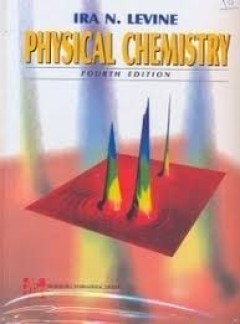
Physical Chemistry
The fourth edition of Physical Chemistry by Ira N. Levine provides a clear and thorough presentation of physical chemistry concepts, blending theory with mathematical rigor. It is widely used in university chemistry programs and includes detailed explanations and practice problems.
- Edition
- 4th Edition
- ISBN/ISSN
- 0-07-113472-7
- Collation
- xx, 946 pages : illustrations ; 25 cm
- Series Title
- -
- Call Number
- 5413 L665
Quantum Mechanics of Molecular Rate Processes
This foundational text by Raphael D. Levine explores the application of quantum mechanics to molecular dynamics and chemical reaction rates. It combines theory with practical examples and remains influential in theoretical chemistry and reaction kinetics.
- Edition
- 1st Edition
- ISBN/ISSN
- 0-486-40692-x
- Collation
- xii, 285 pages : illustrations ; 24 cm
- Series Title
- Oxford Series in Advanced Chemistry
- Call Number
- 541.394 L665
Organic Electrochemistry: Revised and Expanded
The 4th edition of Organic Electrochemistry offers extensive coverage of electrochemical methods and their applications in organic synthesis and industrial chemistry. Edited by Henning Lund and Ole Hammerich, this authoritative volume includes theoretical foundations, experimental techniques, and practical case studies.
- Edition
- 4th Edition
- ISBN/ISSN
- 0-8247-0430-4
- Collation
- xxi, 1288 pages : illustrations ; 26 cm
- Series Title
- -
- Call Number
- 541.37
Computational Molecular Spectroscopy
A technical reference bridging quantum chemical theory with experimental spectroscopic practice. Chapters cover the Born–Oppenheimer approximation, electronic states, potential energy surfaces, rotation‑vibration theory, rovibronic effects, and molecular dynamics. The book offers both theoretical frameworks and practical examples for interpreting and predicting high‑resolution molecular s…
- Edition
- 1st edition, 2000
- ISBN/ISSN
- 0-471-48998-0
- Collation
- viii, 688 pages : illustrations ; 24 cm
- Series Title
- Standalone monograph
- Call Number
- 541.28 J51

An Introduction to the Theory of Molecular Structure
This book provides a theoretical introduction to the structure of molecules using quantum mechanical methods. Aimed at students and researchers in physical and theoretical chemistry.
- Edition
- 1st edition
- ISBN/ISSN
- -
- Collation
- x, 264 pages : illustrations ; 23 cm
- Series Title
- International Series of Monographs on Chemistry
- Call Number
- 541.2201 C472
Modern Electrochemistry • 2
Volume 2 of the foundational series "Modern Electrochemistry", this book focuses on electrodics—the study of electron transfer reactions at interfaces. It is a key reference for graduate students and professionals in electrochemistry.
- Edition
- 2nd edition
- ISBN/ISSN
- 0-306-25002-0
- Collation
- xvi, 820 pages : illustrations ; 24 cm
- Series Title
- Modern Electrochemistry
- Call Number
- 541.7 B665
 Computer Science, Information & General Works
  Philosophy & Psychology
  Religion
  Social Sciences
  Language
  Pure Science
  Applied Sciences
  Art & Recreation
  Literature
  History & Geography