Filter by

Vogel’s Elementary Practical Organic Chemistry. Part 1: Preparations
Standard laboratory manual for organic chemistry preparations. Includes detailed experimental procedures and techniques. Widely used by undergraduate chemistry students.
- Edition
- Third edition
- ISBN/ISSN
- 0-582-47009-9
- Collation
- -
- Series Title
- Not specified
- Call Number
- 547 V878
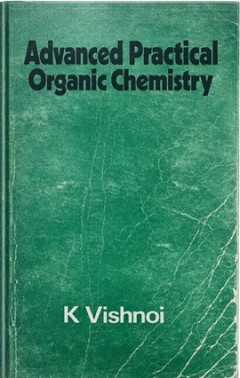
Advanced Practical Organic Chemistry
Practical guide for laboratory techniques in organic chemistry. Includes experimental procedures, methods, and applications for students and researchers. Widely used as a teaching laboratory manual.
- Edition
- Reprint (1982) (First edition 1979)
- ISBN/ISSN
- 0-7069-1552-6
- Collation
- -
- Series Title
- Not specified
- Call Number
- 547 V822
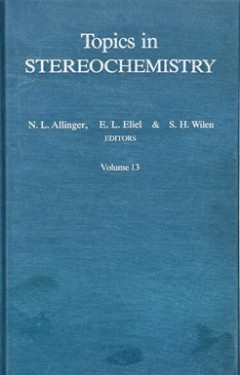
Topics in Stereochemistry
Scholarly volume focusing on advanced topics in stereochemistry. Contains contributions from multiple researchers. Part of the ongoing Topics in Stereochemistry series.
- Edition
- Not specified
- ISBN/ISSN
- 0-471-05680-4
- Collation
- 1 volume ; 24 cm
- Series Title
- Topics in Stereochemistry
- Call Number
- 547.5046 T673

Nitration of Hydrocarbons and Other Organic Compounds
Translation of a Russian work on nitration processes in organic chemistry. Covers reactions, mechanisms, and industrial applications of nitration of hydrocarbons and related compounds. First published in English in 1959.
- Edition
- Not specified
- ISBN/ISSN
- -
- Collation
- 1 volume ; 24 cm
- Series Title
- -
- Call Number
- 547.41 T673
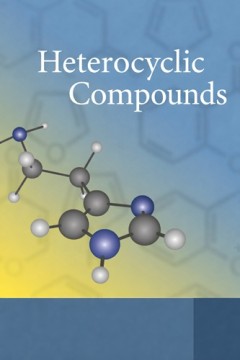
Heterocyclic Compounds
Scientific reference work focusing on the chemistry, synthesis, structure, and applications of 1,2,4-triazoles. Part of The Chemistry of Heterocyclic Compounds series. Series editors: Arnold Weissberger and Edward C. Taylor.
- Edition
- Not specified
- ISBN/ISSN
- 0-471-04656-6
- Collation
- 1 volume ; 24 cm
- Series Title
- The Chemistry of Heterocyclic Compounds
- Call Number
- 547.593 T284
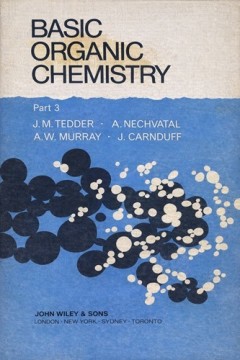
Basic Organic Chemistry. Part 3
This volume introduces students to general organic chemistry mechanisms. It covers aromaticity, heterocyclic compounds, alicyclic and saturated heterocyclic compounds, molecular shape, reaction mechanisms, and applications of simple quantum mechanics to organic molecules.
- Edition
- Not explicitly stated (likely first edition, 1970)
- ISBN/ISSN
- 0-471-85013-6
- Collation
- -
- Series Title
- Basic Organic Chemistry
- Call Number
- 547 T256

Organic Chemistry for Students of Biology and Medicine
Includes index. Originally published in 1971; second edition issued in 1978 with updated content for students of biology and medicine.
- Edition
- Second Edition
- ISBN/ISSN
- 0-582-44041-6
- Collation
- 1 volume : illustrations ; 24 cm (add page numbers if you want exact detail)
- Series Title
- (Not available)
- Call Number
- 547 T238

Solved Problems in Organic Chemistry
Cover includes Arabic text: • ماجستير في علم الكيمياء (Master's in Chemistry) • كلية العلوم (College of Science) • طبيقية سليمان - الدين (Sulayman Al-Din Applied)
- Edition
- Not specified
- ISBN/ISSN
- -
- Collation
- -
- Series Title
- -
- Call Number
- 547.0076 T129
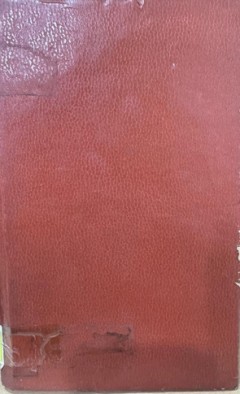
Basic Organic Chemistry
Basic Organic Chemistry, Part 2 by J. M. Tedder and A. Nechvatal is a foundational textbook covering organic reaction mechanisms, functional group chemistry, and structural principles. Published by John Wiley and Sons in 1967, it is designed for undergraduate students.
- Edition
- Not specified
- ISBN/ISSN
- -
- Collation
- -
- Series Title
- -
- Call Number
- 547 T256
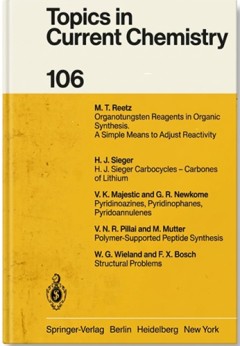
Synthetic and Structural Problems
This volume presents advanced topics in synthetic and structural chemistry, including organometallic reagents, carbanion chemistry, and polymer-supported synthesis, contributed by multiple researchers.
- Edition
- Not specified
- ISBN/ISSN
- 3-540-11766-0
- Collation
- 1 volume
- Series Title
- Topics in Current Chemistry ; 106
- Call Number
- 547.2 S993
 Computer Science, Information & General Works
  Philosophy & Psychology
  Religion
  Social Sciences
  Language
  Pure Science
  Applied Sciences
  Art & Recreation
  Literature
  History & Geography