Filter by
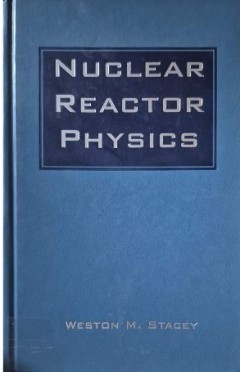
Nuclear Reactor Physics
This book provides a detailed introduction to the physics of nuclear reactors. It covers neutron behavior, reactor kinetics, thermodynamics, and design principles. Intended for students and professionals in nuclear engineering, it explains theoretical concepts along with practical applications in reactor operation and safety.
- Edition
- 2st Edition
- ISBN/ISSN
- 0471391271
- Collation
- 707
- Series Title
- -
- Call Number
- 6214831 S775
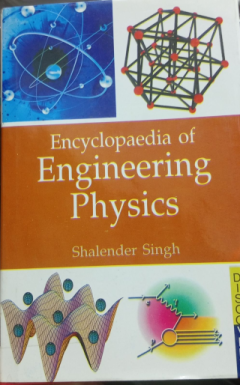
Encyclopaedia of Engineering Physics
An encyclopedic reference covering fundamental and applied concepts of engineering physics including mechanics, electromagnetism, quantum physics, solid state physics, waves, and modern physics topics for engineering students.
- Edition
- First Edition
- ISBN/ISSN
- 978-81-8356-349-9
- Collation
- 1 volume : illustrations ; 24 cm
- Series Title
- -
- Call Number
- 620.1 S617
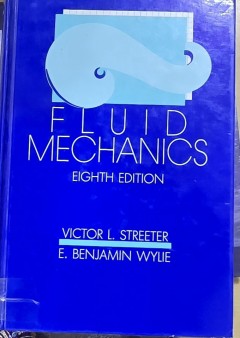
Fluid Mechanics
A widely used textbook providing comprehensive coverage of the principles and applications of fluid mechanics for students in civil, mechanical, and other engineering disciplines. This edition features enhanced examples, problems, and modern applications.
- Edition
- 8
- ISBN/ISSN
- 0-07-062242-6
- Collation
- 586
- Series Title
- -
- Call Number
- 620.106/S838
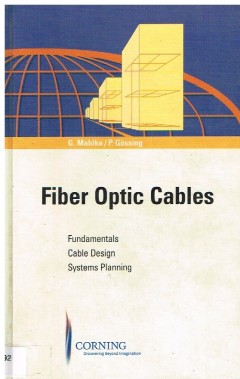
FIBER OPTIC CABLES
- Edition
- 4
- ISBN/ISSN
- 3895781622
- Collation
- 304
- Series Title
- -
- Call Number
- 621.3692/M214
- Edition
- 4
- ISBN/ISSN
- 3895781622
- Collation
- 304
- Series Title
- -
- Call Number
- 621.3692/M214

Matter and Interactions: Electric and Magnetic Interactions
This volume of Matter and Interactions introduces students to electric and magnetic interactions using a modern and integrated approach. It emphasizes microscopic models of matter and links them to macroscopic behavior, using computation and visualization to enhance understanding
- Edition
- 4th Edition (most recent major edition
- ISBN/ISSN
- 0-471-44255-0
- Collation
- xxii, 648 pages: illustrations (some color); 27 cm
- Series Title
- Matter and Int530.14 C437m v.2 (or use your institution’s classification style)eractions (Volume 2)
- Call Number
- 530/CH426
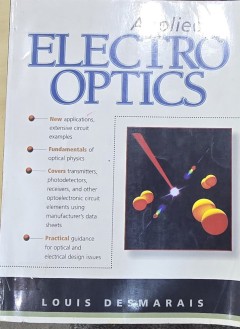
APPLIED ELECTRO-OPTICS
This book focuses on the interaction of light and electromagnetic phenomena, emphasizing theoretical foundations and applications in electro-optical systems.
- Edition
- 1
- ISBN/ISSN
- 0-13-802711-0
- Collation
- 337
- Series Title
- -
- Call Number
- 621.36/D463
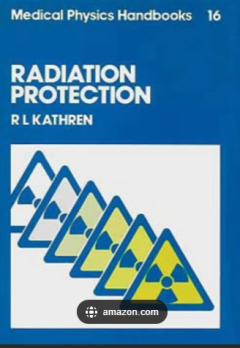
Radiation Protection
A book written for medical physicists and related professionals that provides a brief and succinct overview of the scientific and engineering bases of ionizing radiation protection. The book begins with historical background, reviews basic radiation biology and radiological physics. It discusses the physical and biological bases of radiation protection, then covers applied techniques: standards…
- Edition
- 1st edition
- ISBN/ISSN
- 978-0852745540
- Collation
- -
- Series Title
- -
- Call Number
- 616 7289 K11

Nuclear Instruments and Methods in Physics Research. Section A: Accelerators,…
Contains proceedings of the International Conference on X-ray and VUV Synchrotron Radiation Instrumentation, held at Stanford University, California, July 29–August 2, 1985.
- Edition
- -
- ISBN/ISSN
- -
- Collation
- Vol. A246, Nos. 1–3, 1–890 p.
- Series Title
- Nuclear Instruments and Methods in Physics Research. Section A
- Call Number
- 539 K13
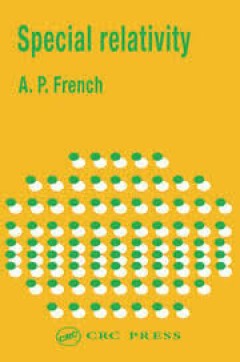
Special Relativity
A concise and conceptually focused treatment of special relativity, part of the MIT Introductory Physics Series. The narrative emphasizes physical reasoning over lengthy algebraic derivations and includes selected problem sets for student reinforcement.
- Edition
- 1st edition
- ISBN/ISSN
- 0-7487-6422-4
- Collation
- 296 pages
- Series Title
- MIT Introductory Physics Series
- Call Number
- 539.72 F873
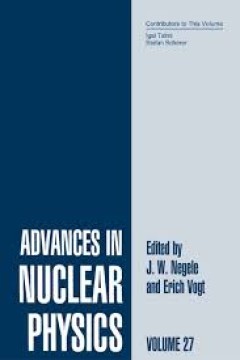
Advances in Nuclear Physics
Volume 27 features Igal Talmi on 50 years of the nuclear shell model and Stefan Scherer on chiral perturbation theory, providing both historical and modern theoretical perspectives.
- Edition
- 1st edition
- ISBN/ISSN
- 0-306-47708-4
- Collation
- xv, 546 pages : illustrations ; 24 cm
- Series Title
- Advances in Nuclear Physics
- Call Number
- 539.705 N384
 Computer Science, Information & General Works
  Philosophy & Psychology
  Religion
  Social Sciences
  Language
  Pure Science
  Applied Sciences
  Art & Recreation
  Literature
  History & Geography