BOOK
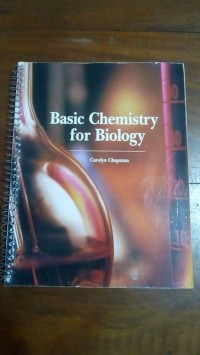
basic chemistry for biology
Basic chemistry provides the foundational understanding necessary to explore and comprehend biological processes. At its core, biology is deeply intertwined with chemistry, as all living organisms are composed of atoms and molecules that interact through chemical reactions.
The study of atoms—the fundamental units of matter—reveals that elements such as carbon, hydrogen, nitrogen, and oxygen are integral to life's molecular structures. These elements combine to form molecules like water, carbohydrates, lipids, proteins, and nucleic acids, each playing specific roles in biological functions. For instance, water's polarity and hydrogen bonding capabilities are crucial for maintaining cellular structures and facilitating biochemical reactions.
pressbooks.pub
Chemical bonds, including covalent, ionic, and hydrogen bonds, dictate the shape and function of biological molecules. The unique properties of carbon, due to its tetravalency, enable the formation of diverse organic compounds essential for life. Additionally, understanding the principles of energy transfer, such as those involved in metabolism and enzyme activity, is vital for grasping how organisms harness and utilize energy.
In summary, a solid grasp of basic chemistry is indispensable for delving into the complexities of biology. It equips students and professionals with the tools to understand the molecular mechanisms underlying life processes, thereby bridging the gap between chemical principles and biological phenomena.
Availability
Detail Information
- Series Title
-
-
- Call Number
-
-
- Publisher
- 0-697-24121-1 : McGraw-Hill Companes., 1996
- Collation
-
-
- Language
-
English
- ISBN/ISSN
-
-
- Classification
-
NONE
- Content Type
-
text
- Media Type
-
unmediated
- Carrier Type
-
-
- Edition
-
-
- Subject(s)
-
-
- Specific Detail Info
-
-
- Statement of Responsibility
-
-
Other version/related
No other version available
File Attachment
Comments
You must be logged in to post a comment
 Computer Science, Information & General Works
  Philosophy & Psychology
  Religion
  Social Sciences
  Language
  Pure Science
  Applied Sciences
  Art & Recreation
  Literature
  History & Geography