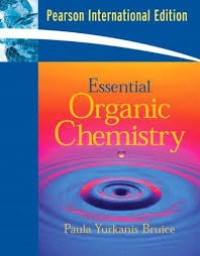
BOOK
Essential ORGANIC CHEMISTRY
Chemical synthesis is foundational across fields like pharmaceuticals, materials, and energy, yet current workflows often rely on repetitive trial-and-error, making them time-consuming and resource-intensive. To overcome these limitations, modern large language models (LLMs), exemplified by GPT‑4, have been fine‑tuned on millions of domain-specific Q&A pairs, creating a specialized assistant—Chemma. Chemma outperforms previous methods in key tasks such as single‑step retrosynthesis planning and yield prediction, demonstrating superior accuracy and efficiency. When integrated with active learning and Bayesian optimizations, it autonomously navigated reaction spaces, notably achieving a 67% isolated yield in an unreported Suzuki–Miyaura cross‑coupling within just 15 iterations—without recourse to quantum‑chemical computation
arxiv.org
. These findings underscore the transformative potential of AI‑driven tools in streamlining organic synthesis, enhancing experimental design, and fostering human–machine collaboration for rapid scientific discovery.
Availability
No copy data
Detail Information
- Series Title
-
-
- Call Number
-
-
- Publisher
- New York : PEARSON EDUCATO., 2006
- Collation
-
-
- Language
-
Arabic
- ISBN/ISSN
-
0-13-198483-7
- Classification
-
NONE
- Content Type
-
-
- Media Type
-
unmediated
- Carrier Type
-
-
- Edition
-
1st edition
- Subject(s)
-
-
- Specific Detail Info
-
-
- Statement of Responsibility
-
-
Other version/related
No other version available
File Attachment
Comments
You must be logged in to post a comment
 Computer Science, Information & General Works
  Philosophy & Psychology
  Religion
  Social Sciences
  Language
  Pure Science
  Applied Sciences
  Art & Recreation
  Literature
  History & Geography