Filter by
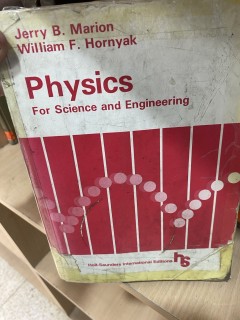
Physics for Science and Engineering
A foundational textbook covering introductory physics for science and engineering students. Topics typically include mechanics, thermodynamics, waves, electricity, magnetism, and modern physics, with emphasis on problem-solving and applications.
- Edition
- 1st Edition
- ISBN/ISSN
- -
- Collation
- -
- Series Title
- -
- Call Number
- 530 M341

Study of monogenean parasites on so,e fishes from lesser zab and greater zab …
- Edition
- -
- ISBN/ISSN
- -
- Collation
- -
- Series Title
- -
- Call Number
- 571,99/N91
- Edition
- -
- ISBN/ISSN
- -
- Collation
- -
- Series Title
- -
- Call Number
- 571,99/N91

Molecular identification of some mosquito species (diptera:culicidae)with mor…
- Edition
- -
- ISBN/ISSN
- -
- Collation
- -
- Series Title
- -
- Call Number
- 595,77/Y20
- Edition
- -
- ISBN/ISSN
- -
- Collation
- -
- Series Title
- -
- Call Number
- 595,77/Y20
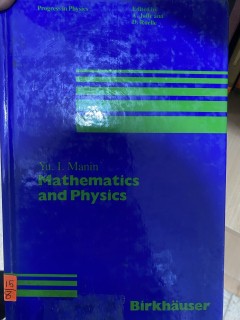
Mathematics and Physics
This work explores deep connections between modern mathematics and theoretical physics, including quantum field theory, geometry, and symmetry. Written by Yuri Manin, it reflects the growing interaction between the two disciplines and is intended for advanced students and researchers.
- Edition
- 1st Edition
- ISBN/ISSN
- 978-0817631959
- Collation
- -
- Series Title
- -
- Call Number
- 530.15 M274

Renormalization
“Renormalization” by Edouard Manoukian is a well-known textbook in advanced physics, especially in quantum field theory (QFT). Here’s a clear breakdown of what it is and why it matters:
- Edition
- 1st Edition
- ISBN/ISSN
- -
- Collation
- -
- Series Title
- -
- Call Number
- 530.15 M206
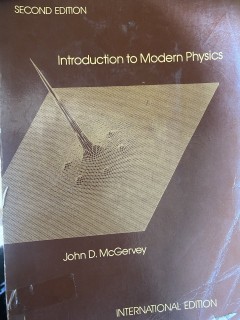
Introduction to Modern Physics
A comprehensive introductory textbook on modern physics, presenting key concepts such as special relativity, quantum theory, atomic and nuclear physics. Designed for undergraduate students, it balances conceptual explanations with mathematical formulation.
- Edition
- 1st Edition
- ISBN/ISSN
- -
- Collation
- -
- Series Title
- -
- Call Number
- 530 m145

The Mechanical Universe: Introduction to Mechanics and Heat
An introductory physics textbook based on the famous Caltech course and video series. It presents the principles of classical mechanics and heat with strong mathematical foundations and clear conceptual explanations, suitable for undergraduate students.
- Edition
- 1st Edition
- ISBN/ISSN
- -
- Collation
- -
- Series Title
- -
- Call Number
- 531 O45
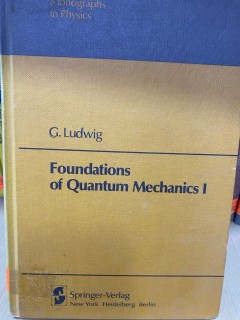
Foundations of Quantum Mechanics I
A rigorous and axiomatic treatment of quantum mechanics, focusing on its logical and mathematical structure. This volume lays the foundational framework for understanding quantum theory from a conceptual and formal perspective, intended for advanced students and researchers.
- Edition
- 1st Edition
- ISBN/ISSN
- -
- Collation
- -
- Series Title
- -
- Call Number
- 530.12 L948
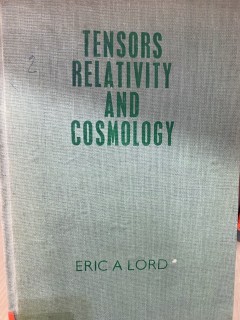
Tensors, Relativity and Cosmology
A specialized physics text introducing tensor methods and their applications in general relativity and cosmology. The book bridges mathematical formalism with physical interpretation, making it useful for advanced undergraduate and graduate students.
- Edition
- 1st Edition
- ISBN/ISSN
- -
- Collation
- -
- Series Title
- -
- Call Number
- 530. 11 L866
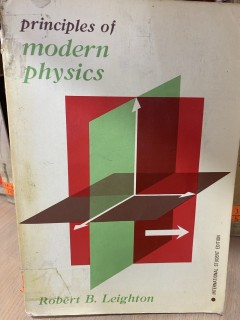
Principles of Modern Physics
A foundational textbook introducing the principles of modern physics, including special relativity, quantum theory, atomic structure, and nuclear physics. Written by Robert B. Leighton, it is known for its clear explanations and strong conceptual approach.
- Edition
- 1st Edition
- ISBN/ISSN
- -
- Collation
- -
- Series Title
- -
- Call Number
- 530 L528
 Computer Science, Information & General Works
  Philosophy & Psychology
  Religion
  Social Sciences
  Language
  Pure Science
  Applied Sciences
  Art & Recreation
  Literature
  History & Geography