Filter by
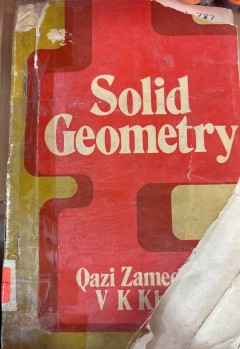
Solid Geometry
This textbook provides a foundational introduction to three-dimensional analytical geometry, designed specifically for undergraduate students (B.A./B.Sc.). It covers essential topics such as the coordinates of points in space, equations of lines and planes, and the properties of curved surfaces including spheres, cones, and cylinders. The book is characterized by its structured approach to solv…
- Edition
- -
- ISBN/ISSN
- -
- Collation
- -
- Series Title
- -
- Call Number
- 516 Z23
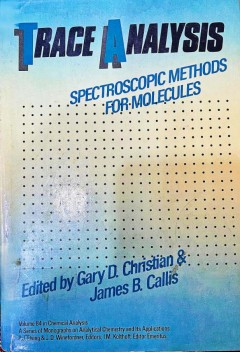
Trace Analysis: Spectroscopic Methods for Molecules.
Trace Analysis: Spectroscopic Methods for Molecules (1986), edited by Gary D. Christian and James B. Callis, serves as a comprehensive technical guide to the identification and quantification of molecular species at extremely low concentrations. As Volume 84 of the Chemical Analysis series, it was designed as a direct companion to Volume 46, which covered trace analysis for elements. While ele…
- Edition
- 1
- ISBN/ISSN
- -
- Collation
- -
- Series Title
- -
- Call Number
- 543000C555
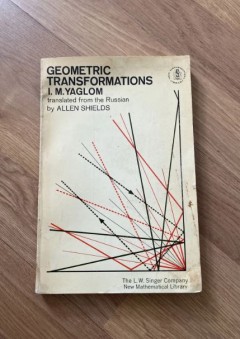
Geometric Transformations I
This classic work introduces readers to a completely different way of looking at familiar geometric facts by focusing on transformations of the plane that do not alter the shape or size of figures. It specifically explores distance-preserving transformations—such as translations, rotations, reflections, and glide reflections—to bridge high school Euclidean geometry with sophisticated group-…
- Edition
- First English Edition
- ISBN/ISSN
- 0394015649
- Collation
- -
- Series Title
- -
- Call Number
- 516 Y11
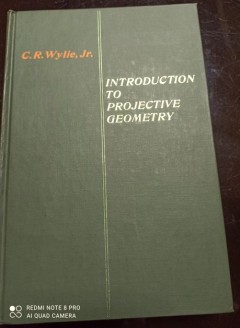
Introduction to Projective Geometry
This textbook offers a rigorous introduction to projective geometry, a field that studies properties invariant under projection. Unlike standard Euclidean geometry, which focuses on distance and angle measurements, this text explores foundational concepts such as incidence, duality, and cross-ratio using both synthetic and algebraic methods. Wylie meticulously develops the theory from initial a…
- Edition
- 1st
- ISBN/ISSN
- 0070721955
- Collation
- -
- Series Title
- -
- Call Number
- 516.5 W983

Introduction to Non-Euclidean Geometry
One of the first college-level texts for elementary courses in the subject, this book provides a concise, readable introduction to non-Euclidean geometry geared toward students with a background in calculus. It offers a detailed historical treatment of the centuries-long attempt to prove Euclid’s parallel postulate and covers key topics such as hyperbolic and elliptic plane geometry and trigo…
- Edition
- 1st
- ISBN/ISSN
- B0007DDXYU
- Collation
- -
- Series Title
- -
- Call Number
- 516.9 W853
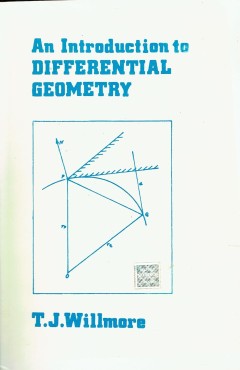
An Introduction to Differential Geometry
This classic textbook provides a rigorous yet accessible introduction to the fundamental concepts of differential geometry, tailored for advanced undergraduate and graduate students in mathematics and physics. The text is divided into two primary parts: the first employs vector methods to explore the classical theory of curves and surfaces, while the second introduces the more modern language o…
- Edition
- 1st
- ISBN/ISSN
- 0198531257
- Collation
- -
- Series Title
- -
- Call Number
- 516.36 W664

An Introduction to Transform Theory
This textbook is essentially compiled from lecture notes delivered by David Vernon Widder at Harvard University. It provides a rigorous and lucid introduction to the mathematical theory of transforms, starting with a rapid overview of Laplace integrals and their use in solving differential equations. Rather than being an encyclopedic reference, the book focuses on fundamental aspects of the the…
- Edition
- 1st
- ISBN/ISSN
- 0127485503
- Collation
- -
- Series Title
- -
- Call Number
- 516.1 W638
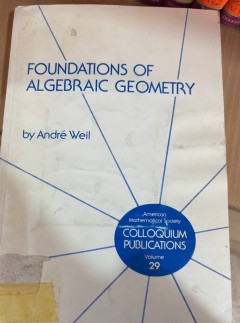
Foundations of Algebraic Geometry
A landmark work in 20th-century mathematics, this text was written by André Weil to provide the first rigorous and self-contained foundation for algebraic geometry over arbitrary fields. Moving away from the intuitive but sometimes imprecise methods of the Italian school, Weil utilizes the theory of abstract fields and valuation theory to develop a systematic framework for algebraic varieties.…
- Edition
- Revised and Enlarged Edition
- ISBN/ISSN
- 0821810294
- Collation
- -
- Series Title
- -
- Call Number
- 516.35 W447
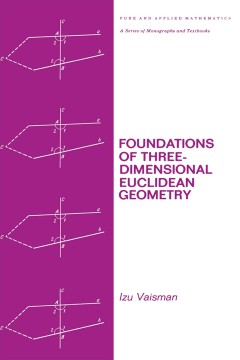
Foundations of Three-Dimensional Euclidean Geometry
This textbook, part of the Pure and Applied Mathematics series (Volume 56), presents a modern, rigorous axiomatic construction of three-dimensional Euclidean geometry. Vaisman employs a graduated formulation of axioms—including incidence, order, and congruence—to characterize Euclidean space up to an isomorphism. A distinctive feature is the early introduction of the parallel axiom, allowin…
- Edition
- 1st
- ISBN/ISSN
- 0824769015
- Collation
- -
- Series Title
- -
- Call Number
- 516.2 V132

Philosophy of Geometry from Riemann to Poincaré
This scholarly work provides a critical survey of the seminal period in the modern philosophy of geometry, spanning from the 1850s to the turn of the century. It traces the evolution of geometric thought starting with Riemann's generalized conception of space and concludes with Hilbert's axiomatics and Poincaré's conventionalism. Torretti explores how the discovery of non-Euclidean geometries …
- Edition
- Pallas Paperbacks Edition
- ISBN/ISSN
- 9027718377
- Collation
- -
- Series Title
- -
- Call Number
- 516.001 T689
 Computer Science, Information & General Works
  Philosophy & Psychology
  Religion
  Social Sciences
  Language
  Pure Science
  Applied Sciences
  Art & Recreation
  Literature
  History & Geography