Filter by
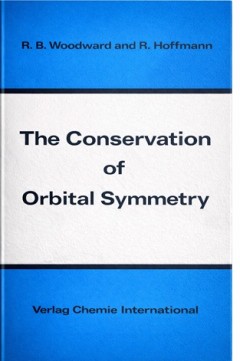
The Conservation of Orbital Symmetry
A classic work introducing the conservation of orbital symmetry in organic reactions. The book presents theoretical foundations and applications of symmetry rules (Woodward–Hoffmann rules), widely used in understanding pericyclic reactions and reaction mechanisms.
- Edition
- Not clearly stated (commonly treated as standard/f
- ISBN/ISSN
- 0-89573-109-6
- Collation
- -
- Series Title
- -
- Call Number
- 547 W912
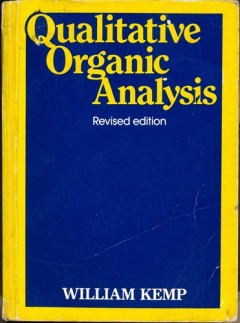
Qualitative Organic Analysis
This book provides a practical introduction to qualitative organic analysis, guiding students in the identification of organic compounds. It integrates classical chemical tests with modern spectroscopic methods, helping learners understand both theoretical principles and laboratory applications.
- Edition
- Revised edition
- ISBN/ISSN
- 0-07-084092-X
- Collation
- -
- Series Title
- -
- Call Number
- 547.34 W716
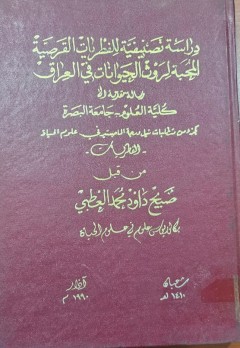
دراسة تصنيفية للفطريات القرصية المحبة لرو…
- Edition
- -
- ISBN/ISSN
- -
- Collation
- -
- Series Title
- -
- Call Number
- 589 824ع
- Edition
- -
- ISBN/ISSN
- -
- Collation
- -
- Series Title
- -
- Call Number
- 589 824ع
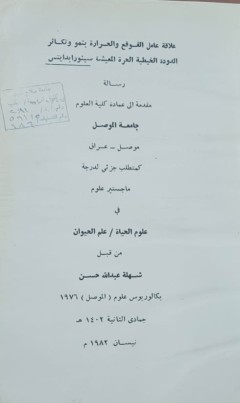
علاقة عامل القوقع والحرارة بنمو وتكاثر ال�…
- Edition
- -
- ISBN/ISSN
- -
- Collation
- -
- Series Title
- -
- Call Number
- 591,5 48م
- Edition
- -
- ISBN/ISSN
- -
- Collation
- -
- Series Title
- -
- Call Number
- 591,5 48م
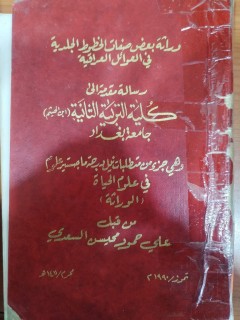
وراثة بعض صفات الخطوط الجلدية في العوائل ا…
- Edition
- -
- ISBN/ISSN
- -
- Collation
- -
- Series Title
- -
- Call Number
- 575,1 284س
- Edition
- -
- ISBN/ISSN
- -
- Collation
- -
- Series Title
- -
- Call Number
- 575,1 284س

Biological Study and The Potential of Some Bio- Insecticides as Biocontrol ag…
- Edition
- -
- ISBN/ISSN
- -
- Collation
- -
- Series Title
- -
- Call Number
- 570 H474
- Edition
- -
- ISBN/ISSN
- -
- Collation
- -
- Series Title
- -
- Call Number
- 570 H474

NORMAL & ABNORMAL VAGINAL DISCHARGESA THE INCIDENCE OF AEROBIC BACTERIA, Y…
- Edition
- -
- ISBN/ISSN
- -
- Collation
- -
- Series Title
- -
- Call Number
- 570 D394
- Edition
- -
- ISBN/ISSN
- -
- Collation
- -
- Series Title
- -
- Call Number
- 570 D394
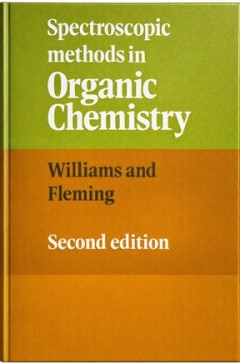
Spectroscopic Methods in Organic Chemistry
This book provides an introduction to the use of spectroscopic techniques—ultraviolet (UV), infrared (IR), nuclear magnetic resonance (NMR), and mass spectrometry—in determining the structure of organic compounds. It is designed as both a textbook for students and a reference for researchers in organic chemistry.
- Edition
- Second edition
- ISBN/ISSN
- 07-084023-7
- Collation
- -
- Series Title
- -
- Call Number
- 547 W664
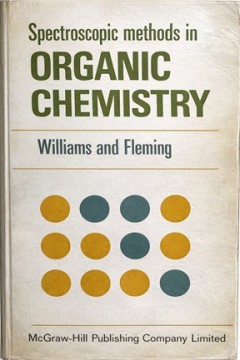
Spectroscopic Methods in Organic Chemistry
Introductory and advanced guide to spectroscopic techniques in organic chemistry. Covers IR, NMR, and UV spectroscopy methods. Widely used as a reference for chemistry students and researchers.
- Edition
- Revised first impression
- ISBN/ISSN
- -
- Collation
- -
- Series Title
- European Chemistry Series (mentioned in front pages)
- Call Number
- 547 W722
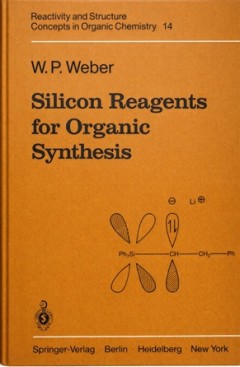
Silicon Reagents for Organic Synthesis
Advanced reference on the use of silicon reagents in organic synthesis. Covers reaction mechanisms, structure, and applications of organosilicon compounds. Part of a specialized series on organic chemistry concepts.
- Edition
- Not specified
- ISBN/ISSN
- 3-540-11675-3
- Collation
- -
- Series Title
- Reactivity and Structure: Concepts in Organic Chemistry ; Volume 14
- Call Number
- 547.22 W376
 Computer Science, Information & General Works
  Philosophy & Psychology
  Religion
  Social Sciences
  Language
  Pure Science
  Applied Sciences
  Art & Recreation
  Literature
  History & Geography