Filter by
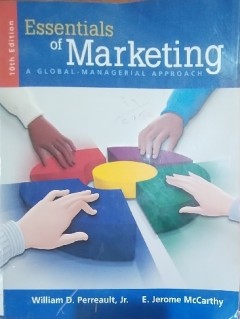
ESSENTIALS OF MARKETING
- Edition
- Edition 10
- ISBN/ISSN
- 0-0-07-293589-8
- Collation
- -
- Series Title
- -
- Call Number
- -
- Edition
- Edition 10
- ISBN/ISSN
- 0-0-07-293589-8
- Collation
- -
- Series Title
- -
- Call Number
- -
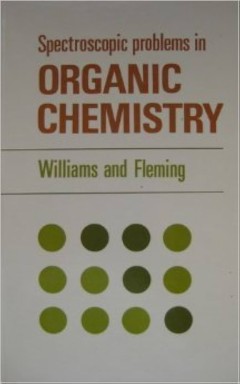
spectroscopic problems in Organic Chemistry
Spectroscopic Problems in Organic Chemistry by Williams and Fleming presents a structured collection of real-world spectroscopic data designed to develop and test students' skills in interpreting organic spectra. The book emphasizes problem-solving using key techniques such as NMR, IR, UV, and mass spectrometry, offering a wide range of unknown compounds for analysis. Through systematic practic…
- Edition
- 1st edition
- ISBN/ISSN
- -
- Collation
- -
- Series Title
- -
- Call Number
- 547 W664

GENERAL AND COMPARATIVE PHYSIOLOGY
- Edition
- -
- ISBN/ISSN
- 0-13-350272-4
- Collation
- -
- Series Title
- -
- Call Number
- 591.1/ H 679
- Edition
- -
- ISBN/ISSN
- 0-13-350272-4
- Collation
- -
- Series Title
- -
- Call Number
- 591.1/ H 679
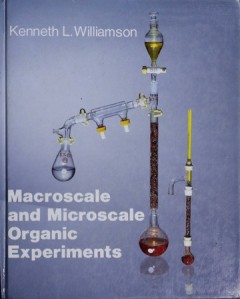
Macroscale and Microscale Organic Experiments
This book provides step-by-step organic chemistry lab experiments at both macroscale and microscale levels. It includes safety information, reaction mechanisms, and techniques used in academic laboratories.
- Edition
- 1st
- ISBN/ISSN
- 0669194298
- Collation
- 716
- Series Title
- -
- Call Number
- 547 W927
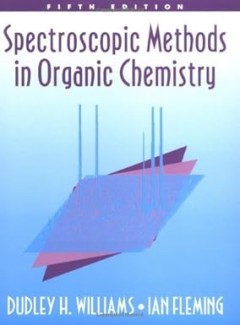
Spectroscopic Methods In Organic Chemistry
This book concentrates on the practical aspects of using spectroscopic techniques to solve structural problems. It is written at a level for an advanced undergraduate or graduate course in applied spectroscopy. It describes the uses of the four spectroscopic methods: UV, IR, NMR and Mass Spectra in organic chemistry.
- Edition
- 5th
- ISBN/ISSN
- 0077091477
- Collation
- 329
- Series Title
- -
- Call Number
- 547,30858 W689
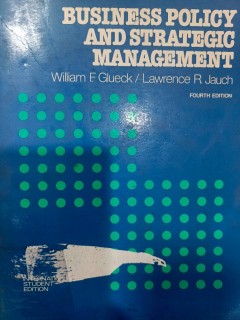
Business Policy &Strategic Management
- Edition
- Edition4
- ISBN/ISSN
- 0-07-023531-7
- Collation
- 875 Page
- Series Title
- -
- Call Number
- -
- Edition
- Edition4
- ISBN/ISSN
- 0-07-023531-7
- Collation
- 875 Page
- Series Title
- -
- Call Number
- -
THE COMITY OF SPIDERS
- Edition
- -
- ISBN/ISSN
- -
- Collation
- -
- Series Title
- -
- Call Number
- 595.4094/ B 861
- Edition
- -
- ISBN/ISSN
- -
- Collation
- -
- Series Title
- -
- Call Number
- 595.4094/ B 861
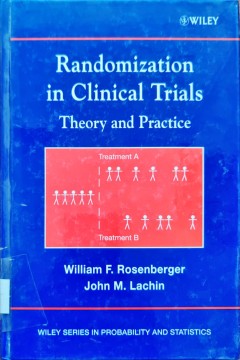
Randomization in Clinical Trial
- Edition
- -
- ISBN/ISSN
- 0-471-23626-8
- Collation
- -
- Series Title
- -
- Call Number
- 610/R788
- Edition
- -
- ISBN/ISSN
- 0-471-23626-8
- Collation
- -
- Series Title
- -
- Call Number
- 610/R788
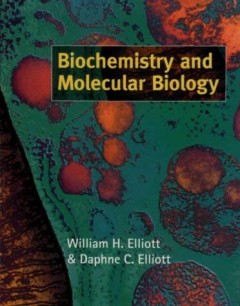
Biochemistry and Molecular Biology
This textbook provides a modern and integrated introduction to the principles of biochemistry and molecular biology, with an emphasis on biomedical applications. Topics include enzyme function, DNA replication, transcription, translation, metabolism, and biotechnology. Illustrated with detailed diagrams and clinical correlations, it is a key reference for biology and medical students.
- Edition
- 1st Edition
- ISBN/ISSN
- 0198577931
- Collation
- -
- Series Title
- -
- Call Number
- 574,192 E46
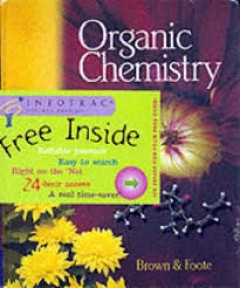
Organic Chemistry
Organic chemistry is the branch of chemistry dedicated to the study of carbon‑containing compounds—their structures, physical and chemical properties, and reactions. Originating from the 19th‑century discovery that organic molecules could be synthetically produced (e.g., Wöhler’s synthesis of urea), the field now encompasses a vast array of compounds that often also contain hydrogen, o…
- Edition
- third edition
- ISBN/ISSN
- 0-534-16696-2
- Collation
- -
- Series Title
- -
- Call Number
- -
 Computer Science, Information & General Works
  Philosophy & Psychology
  Religion
  Social Sciences
  Language
  Pure Science
  Applied Sciences
  Art & Recreation
  Literature
  History & Geography