Filter by
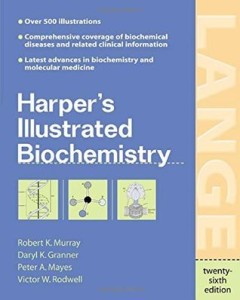
Harper’s Illustrated Biochemistry
A clinically‑oriented review text linking biochemistry to disease processes and medical diagnostics. Features full‑color figures, clinical boxes, case-based learning, sections with review questions, and a new chapter on transition-metal biochemistry. Ideal for USMLE review and medical school curricula.
- Edition
- 26th Edition
- ISBN/ISSN
- 0071389016
- Collation
- -
- Series Title
- -
- Call Number
- 521
The Diversity of Green Plants
- Edition
- -
- ISBN/ISSN
- 0-7131-2866-6
- Collation
- -
- Series Title
- -
- Call Number
- 581.4/B 435
- Edition
- -
- ISBN/ISSN
- 0-7131-2866-6
- Collation
- -
- Series Title
- -
- Call Number
- 581.4/B 435
INTRODTION TO MACROMOLECULAR SCIENCE
- Edition
- -
- ISBN/ISSN
- 0-471-41716-5
- Collation
- -
- Series Title
- -
- Call Number
- 547-7/M963
- Edition
- -
- ISBN/ISSN
- 0-471-41716-5
- Collation
- -
- Series Title
- -
- Call Number
- 547-7/M963
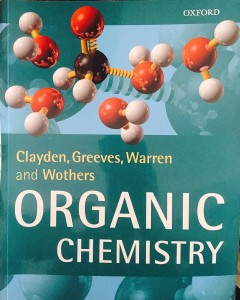
Organic Chemistry
This new and innovative text helps students develop a deeper understanding of organic chemistry. It treats the subject as a coherent whole, complete with numerous logical connections, consequences, and an underlying structure and "language." Employing an approach based on mechanism and reaction type, the book empasizes understanding ideas rather than merely memorizing facts. It shows students h…
- Edition
- 1st
- ISBN/ISSN
- 0198503466
- Collation
- 1508
- Series Title
- -
- Call Number
- 547 C619
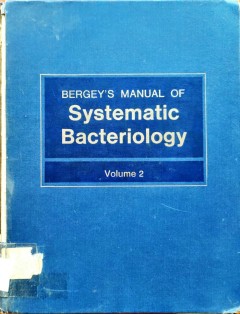
Systematic Bacteriology
- Edition
- -
- ISBN/ISSN
- 0-683-07893-3
- Collation
- -
- Series Title
- -
- Call Number
- 689.90012/K 89
- Edition
- -
- ISBN/ISSN
- 0-683-07893-3
- Collation
- -
- Series Title
- -
- Call Number
- 689.90012/K 89

OPTICAL METHODS IN ULTRACENTRIFUGATION ,ELECTROPHORESIS,AND DIFFUSION
- Edition
- -
- ISBN/ISSN
- 0 19 854605 X
- Collation
- -
- Series Title
- -
- Call Number
- 591.19/L793
- Edition
- -
- ISBN/ISSN
- 0 19 854605 X
- Collation
- -
- Series Title
- -
- Call Number
- 591.19/L793
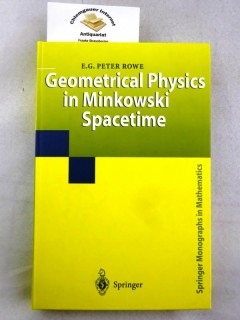
Geometrical Physics in Minkowski Spacetime
- Edition
- 1st Edition
- ISBN/ISSN
- 978‑1‑85233‑366‑9
- Collation
- -
- Series Title
- -
- Call Number
- -
- Edition
- 1st Edition
- ISBN/ISSN
- 978‑1‑85233‑366‑9
- Collation
- -
- Series Title
- -
- Call Number
- -
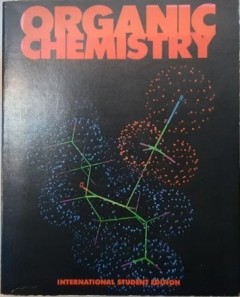
Organic Chemistry: Study Guide and Solutions Manual
Organic chemistry is a fundamental branch of chemistry focused on the structure, properties, composition, reactions, and synthesis of carbon-containing compounds. This field plays a central role in a wide range of scientific disciplines, including pharmaceuticals, petrochemicals, polymers, biochemistry, and environmental science. This report explores key concepts in organic chemistry such as fu…
- Edition
- 1st
- ISBN/ISSN
- 0716718820
- Collation
- 511
- Series Title
- -
- Call Number
- 547 V923
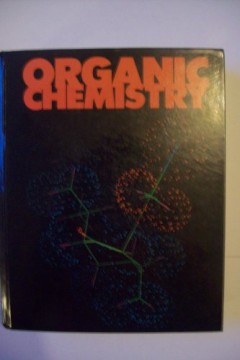
Organic Chemistry vollhardt
Vollhardt and Schore’s Organic Chemistry is a visually rich and mechanistic-first textbook renowned for bridging the gap between structural reasoning and organic reactivity. It emphasizes clarity and conceptual understanding over rote memorization Scope & Structure Divided into 26 chapters (structure, bonding, functional-group reactivity, spectroscopy, natural products, biomolecules)…
- Edition
- -
- ISBN/ISSN
- 0716717867
- Collation
- 1275
- Series Title
- -
- Call Number
- -

A GUIDEBOOK TO MECHANISM IN ORGANIC CHEMISTRY
A Guidebook to Mechanism in Organic Chemistry by Peter Sykes is a foundational text that introduces and explains the principles governing reaction mechanisms in organic chemistry. Designed primarily for undergraduate students, the book bridges the gap between basic organic chemistry and more advanced mechanistic understanding. It explores the logic behind the reactivity and transformation of or…
- Edition
- 6th
- ISBN/ISSN
- 0582446953
- Collation
- 416
- Series Title
- -
- Call Number
- -
 Computer Science, Information & General Works
  Philosophy & Psychology
  Religion
  Social Sciences
  Language
  Pure Science
  Applied Sciences
  Art & Recreation
  Literature
  History & Geography