Filter by
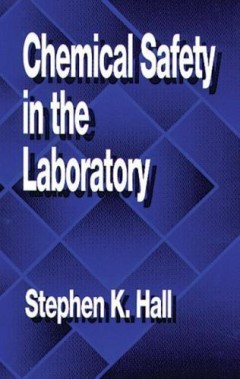
Chemical Safety in the Laboratory
A practical reference covering safe handling, storage, and disposal of chemicals in laboratory settings, along with hazard evaluation and safety procedures.
- Edition
- 1st edition
- ISBN/ISSN
- 0-8737L-896-8
- Collation
- 1 volume (approx. 250 pages) : illustrations ; 24 cm
- Series Title
- -
- Call Number
- 660,2804 H174
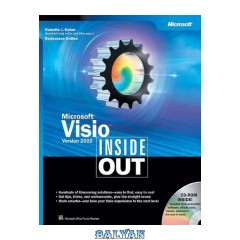
Microsoft Project Inside Out
An in-depth guide to using Microsoft Project 2002, focusing on creating project plans, managing resources, tracking progress, and producing reports. Suitable for users seeking detailed, practical instruction.
- Edition
- 2002 edition
- ISBN/ISSN
- D-7356-1124-6
- Collation
- 1 volume (approx. 800–1000 pages) : illustrations ; 24 cm
- Series Title
- Inside Out
- Call Number
- 658,4040 S863
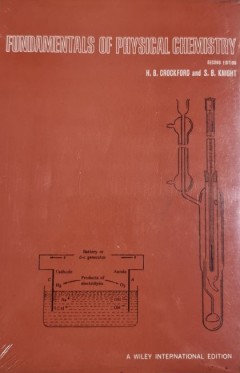
FUNDAMENTALS OF PHYSICAL CHEMISTRY
Physical chemistry is the study of macroscopic and particulate phenomena in chemical systems in terms of the principles, practices, and concepts of physics such as motion, energy, force, time, thermodynamics, quantum chemistry, statistical mechanics, analytical dynamics, and chemical equilibria. This book is written for students with the usual background in general chemistry, and with some expe…
- Edition
- Second edition
- ISBN/ISSN
- -
- Collation
- -
- Series Title
- -
- Call Number
- 541,3 C938
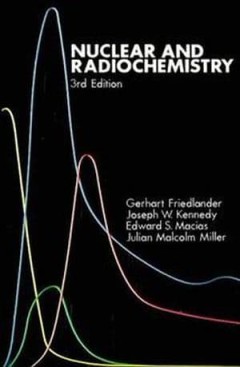
nuclear and radiochemistry
The third edition expands coverage of radiation chemistry, including applied topics, experimental methods, and reactions in gaseous and solid systems. It adds updated data in SI units, improved problem sets, and recent research references.
- Edition
- 3rd
- ISBN/ISSN
- -
- Collation
- -
- Series Title
- -
- Call Number
- 541,38 F911
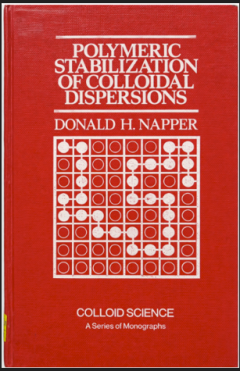
Polymeric Stabilization of Colloidal Dispersions
This monograph provides a detailed treatment of how polymers stabilize colloidal particles in solution, including theoretical models, experimental results, and practical applications in chemistry and materials science.
- Edition
- 1st edition
- ISBN/ISSN
- 13 : 978-0125139809
- Collation
- 428
- Series Title
- Colloid Science: A Series of Monographs
- Call Number
- 541.3541 N217
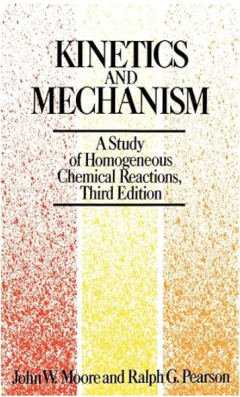
Kinetics and Mechanism
This book provides a detailed introduction to chemical kinetics and reaction mechanisms, explaining how chemical reactions occur and the factors affecting their rates. It is widely used as a textbook for advanced undergraduate and graduate students.
- Edition
- 3rd Edition
- ISBN/ISSN
- 13 : 978-0471035589
- Collation
- 480 pages : illustrations ; 25 cm
- Series Title
- Not Applicable
- Call Number
- 541.394 M819
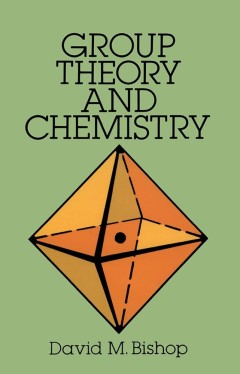
Group Theory and Chemistry
introduces the principles of group theory and explains how they are applied in chemistry, especially in understanding molecular symmetry. The book shows how symmetry helps predict molecular properties, simplify quantum mechanical calculations, and analyze spectroscopy and bonding. It serves as a bridge between abstract mathematics and practical chemical applications.
- Edition
- -
- ISBN/ISSN
- -
- Collation
- -
- Series Title
- -
- Call Number
- 541.2201512 22 B622
Experimental Physical Chemistry
This book provides practical laboratory methods and experiments in physical chemistry. It is designed to help students understand theoretical principles through experimental work and measurements.
- Edition
- Not specified
- ISBN/ISSN
- Not available
- Collation
- 321 pages : illustrations ; 22 cm
- Series Title
- Not Applicable
- Call Number
- 541.072 P177
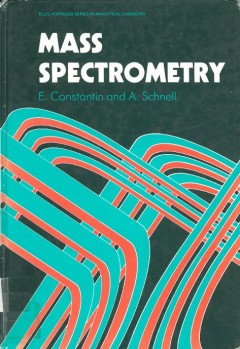
mass spectrometry
introduction to the principles and applications of mass spectrometry in analytical chemistry. It explains the fundamental processes of ionization, mass analysis, and detection, while highlighting the technique’s role in identifying and characterizing chemical compounds. The book also discusses instrumentation and practical applications across fields such as chemistry, biology, and environment…
- Edition
- -
- ISBN/ISSN
- 0135533635
- Collation
- -
- Series Title
- -
- Call Number
- 543,0873 C758

Physical Chemistry: An Advanced Treatise Volume I: Thermodynamics
This volume is part of a comprehensive advanced treatise on physical chemistry, focusing on thermodynamics. It presents rigorous theoretical foundations and detailed discussions intended for advanced students and researchers.
- Edition
- -
- ISBN/ISSN
- 978-0-12-245601-5
- Collation
- Approx. 500–600 pages : illustrations ; 24 cm
- Series Title
- Physical Chemistry: An Advanced Treatise
- Call Number
- 541 P578
 Computer Science, Information & General Works
  Philosophy & Psychology
  Religion
  Social Sciences
  Language
  Pure Science
  Applied Sciences
  Art & Recreation
  Literature
  History & Geography